Knowledge Centre
Learn where your food comes from.
Everything we know about regenerative farming, cattle, premium beef, and life on a fourth-generation family farm.
Explore Our Guides
Intro
Today's consumers ask better questions than ever before.
Where does my food come from?
What do terms like pasture-raised, grass-fed and regenerative actually mean?
How is beef produced?
What makes one farming system different from another?
The Bysonderheid Knowledge Centre exists to answer those questions honestly and transparently.
Whether you're looking to buy directly from the farm or you're simply interested in learning more about regenerative agriculture, we hope these resources help you better understand the journey from veld to table.
Grass-Fed vs Grain-Fed Beef: What Every South African Family Should Know
Grass-Fed vs Grain-Fed Beef:
What Every South African Family Should Know

Most of the beef sold in South Africa is grain-finished in a feedlot, and you are almost never told so at the till. It is not a scandal, it is just how the mainstream supply chain works. But if you care where your food comes from, the difference between grass-fed and grain-fed beef is worth understanding, because it changes how the animal lived, how the meat tastes, and what is actually in it.
How the animal is raised
This is the real difference, and everything else follows from it. Grain-fed cattle typically spend their final months in a feedlot, where they are fattened quickly on a grain-based ration to reach slaughter weight sooner. Grass-fed, or more accurately pasture-raised, cattle grow up on natural veld and grass at a slower, more natural pace.
One system is built for speed and volume. The other is built around the land and the animal. Neither is hidden information, but you have to go looking for it, which tells you something in itself.
The taste and texture
Grain-finished beef tends to carry more intramuscular fat, or marbling, which gives a softer, milder result. Grass-fed beef is usually leaner, with a firmer texture and a deeper, more mineral, more "beefy" flavour. It tastes like the animal ate grass, because it did.
Leaner also means it cooks differently, which catches people out. Grass-fed steak needs a slightly gentler hand on the fire, something we cover in our braai guide.
What is actually in it
The way an animal is fed changes the composition of the meat. Research has consistently found that grass-fed beef has a different fatty-acid profile to grain-fed, including more omega-3 fatty acids and more conjugated linoleic acid (CLA). It also tends to carry more vitamin E and beta-carotene, which is why the fat often has a slightly yellower, more natural colour rather than pure white.
These are differences in what the food is, not health promises, and how you eat overall matters far more than any single ingredient. But if you want beef that is closer to the way it used to be, this is the difference.
What "grass-fed" really means, and what to watch for
Here is the catch. "Grass-fed" is not tightly policed, and some animals are grass-raised and then grain-finished at the end. That is not the same thing. The honest question to ask any producer is simple: was this animal on grass and veld its whole life, or finished on grain?
If they can answer clearly, and tell you the farm and the farmer, you are dealing with someone worth buying from.
Why we farm the way we do
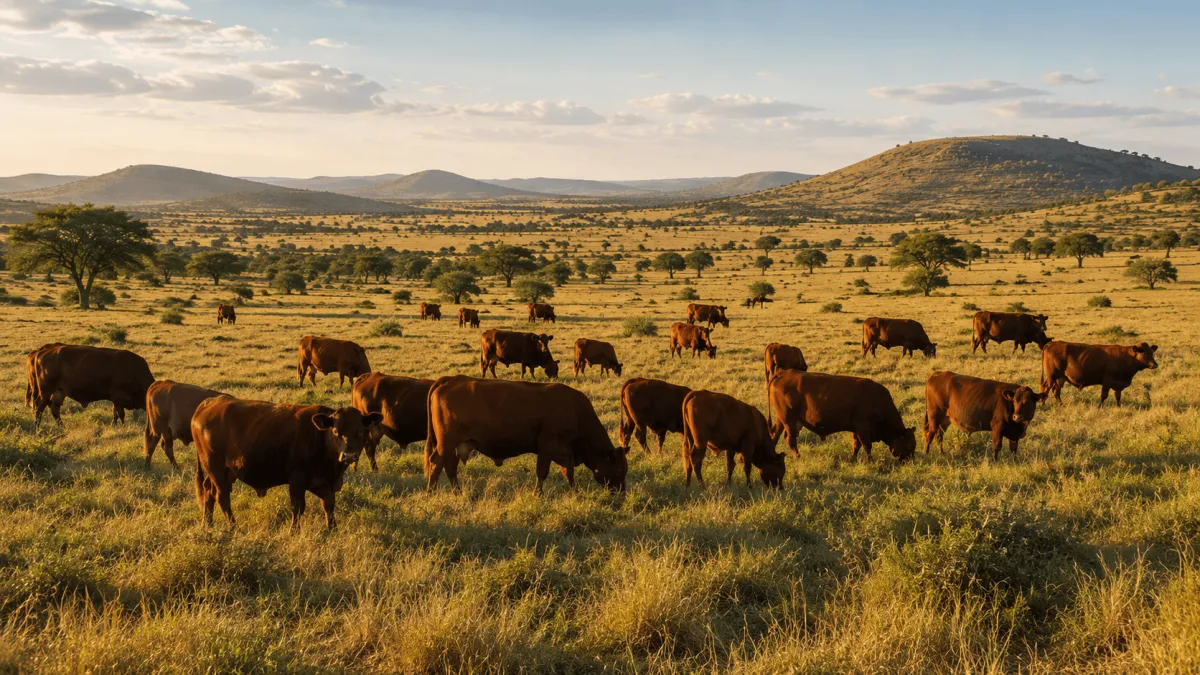
At Bysonderheid, our cattle are raised on the veld in Limpopo, the way beef was meant to be. No feedlot, no anonymity. You know the farm, the family, and the animal behind your beef. That is the whole point.


Bysonderheid
1936 – A family planted roots.
2026 – We invite you to become part of the next chapter.
From our family farm to your family's table.
© Copyright 2026. Bysonderheid Reserve Beef. All Rights Reserved.