Knowledge Centre
Learn where your food comes from.
Everything we know about regenerative farming, cattle, premium beef, and life on a fourth-generation family farm.
Explore Our Guides
Intro
Today's consumers ask better questions than ever before.
Where does my food come from?
What do terms like pasture-raised, grass-fed and regenerative actually mean?
How is beef produced?
What makes one farming system different from another?
The Bysonderheid Knowledge Centre exists to answer those questions honestly and transparently.
Whether you're looking to buy directly from the farm or you're simply interested in learning more about regenerative agriculture, we hope these resources help you better understand the journey from veld to table.
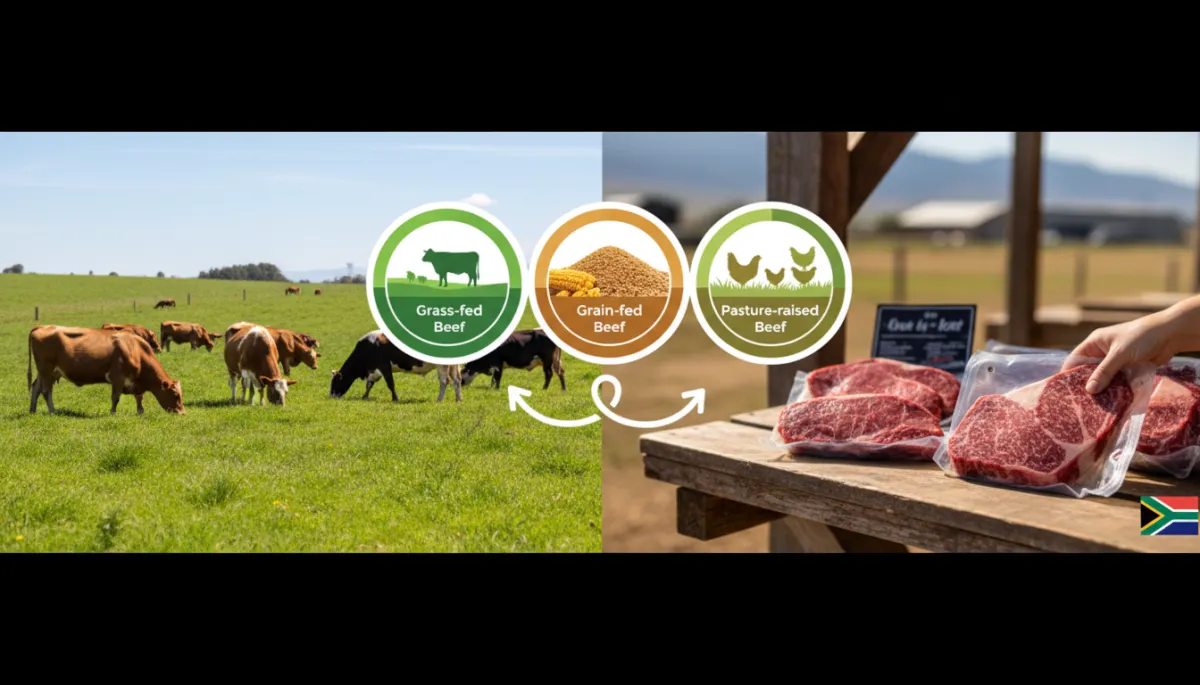
Grass-fed vs Grain-fed vs Pasture-raised Beef Guide
Grass-fed vs Grain-fed vs Pasture-raised Beef: What's the Difference?
Everything You Need to Know Before Buying Beef

Walk into almost any butcher or supermarket today, and you'll see terms like grass-fed, grain-fed, and pasture-raised printed on beef labels.
But what do these terms actually mean?
More importantly, how do they affect the flavor, nutrition, quality, and sustainability of the beef you buy?
The truth is that these labels are often misunderstood. Many people assume one is automatically "better" than another, when in reality each production system has its own advantages, and the way a farm is managed often matters more than the label itself.
In this guide, we'll explain the differences between grass-fed, grain-fed and pasture-raised beef, how each system works, and what you should consider when choosing beef for your family.
What Is Grass-fed Beef?

Grass-fed beef comes from cattle that consume grass, pasture, and forage as the primary source of nutrition throughout their lives.
Instead of being moved into feedlots for grain finishing, these cattle continue grazing natural or cultivated pastures until they reach market weight.
Depending on the region and climate, their diet may also include conserved forage such as hay or silage during periods when fresh grazing is limited.
Grass-fed beef is often recognized for:
Leaner meat with less marbling
A rich, distinctive beef flavor
Higher levels of omega-3 fatty acids
Higher concentrations of CLA (Conjugated Linoleic Acid)
More vitamin E and natural antioxidants
However, not all grass-fed systems are the same.
Pasture quality, rainfall, grazing management and animal genetics all influence the final quality of the beef.
What Is Grain-fed Beef?

Most grain-fed cattle spend the majority of their lives grazing pasture before being transferred to a feedlot for a finishing period.
During this final stage, they receive carefully balanced rations containing grains such as maize together with roughage, vitamins and minerals.
This finishing system aims to:
Increase marbling
Improve tenderness
Produce consistent carcass quality
Reduce finishing time
Because of the increased intramuscular fat, grain-fed beef is often associated with:
Rich flavour
Excellent tenderness
Consistent eating quality
Highly marbled premium steaks
Grain-fed beef remains one of the most widely used production systems throughout the world and produces outstanding beef when managed responsibly.
What Is Pasture-raised Beef?

Pasture-raised describes where cattle are raised, rather than exactly what they eat.
Pasture-raised cattle spend the majority of their lives outdoors on natural pasture where they are free to graze and express normal animal behavior.
Depending on the farming system, pasture-raised cattle may:
Graze year-round
Receive supplementary feed during drought
Be finished entirely on pasture
Or spend a short finishing period on grain
This is why pasture-raised and grass-fed are not always the same thing.
Pasture-raised often reflects a farming philosophy focused on animal welfare, grazing management, and responsible land stewardship.
Comparing the Three Systems

Which Beef Is Healthier?
Grass-fed beef generally contains:
More omega-3 fatty acids
Higher CLA levels
More vitamin E
Less total fat
Grain-fed beef generally contains:
More intramuscular fat
Greater marbling
Higher energy content
Excellent tenderness
Neither system is automatically "healthy" or "unhealthy."
Beef can be part of a healthy diet regardless of production system when consumed as part of a balanced lifestyle.
The most important factors often include:
Overall diet
Portion size
Cooking method
Meat quality
Farm management
Which Beef Tastes Better?

Taste is subjective.
Many people enjoy the stronger, richer flavor of grass-fed beef.
Others prefer the buttery tenderness and marbling associated with grain-fed beef.
Pasture-raised beef can vary considerably depending on genetics, grazing quality and whether grain is used during finishing.
There is no universally "best" tasting beef.
The right choice depends on your own preferences.
The Bysonderheid Perspective

After four generations of farming the same land in Limpopo, we've learned that labels only tell part of the story.
Whether beef is described as grass-fed, grain-fed or pasture-raised, those words don't tell you everything about the quality of the food you're buying.
The condition of the soil, the quality of the pasture, the availability of clean water, animal husbandry, grazing management, and the care taken throughout the animal's life all play an equally important role.
Two farms can both market their beef as "grass-fed", yet produce completely different results because they manage their land differently.
That's why, at Bysonderheid, we believe it's just as important to understand how a farm is managed as it is to understand what the cattle are fed.
Our focus is on regenerative farming practices that improve the health of our soils, strengthen our natural pastures and allow our cattle to thrive in the Limpopo bushveld.
Healthy soil grows healthy grass.
Healthy grass supports healthy cattle.
Healthy cattle nourish healthy families.
That simple philosophy guides every decision we make on Bysonderheid.

How to Choose the Right Beef for Your Family
Rather than asking which production system is "best", ask yourself a few simple questions.
Do I prefer leaner meat or more marbling?
Do I value knowing where my food comes from?
Is animal welfare important to me?
Do I want to support local family farms?
Can I speak directly to the farmer?
The answers to those questions will usually tell you far more than a marketing label ever could.
Frequently Asked Questions
Is pasture-raised the same as grass-fed?
No. Pasture-raised refers to where cattle are raised, while grass-fed refers to what they primarily eat. A pasture-raised animal may still receive grain during part of its life.
Is grain-fed beef unhealthy?
No. Grain-fed beef can be an excellent source of protein, vitamins, and minerals. The choice between grain-fed and grass-fed is often one of personal preference rather than one being inherently good or bad.
Does grass-fed beef taste different?
Yes. Grass-fed beef is often described as having a richer, more robust beef flavour, while grain-fed beef tends to be milder with greater marbling and tenderness.
Can I buy beef directly from a farm?
Yes. Buying directly from a trusted farmer gives you greater transparency about how your food was produced and often provides access to premium quality beef that has been professionally processed and prepared.
Continue Learning
If you found this guide helpful, you may also enjoy:
What Is Grass-fed Beef?
What Is Grain-fed Beef?
What Is Pasture-raised Beef?
What Is Regenerative Farming?
Quarter, Half or Whole Beef: Which Option Is Right for Your Family?
Become Part of the Journey
For almost ninety years, four generations of our family have walked the fields of Bysonderheid.
Today, we're inviting your family to become part of the next chapter.
Join our Founder Families community to receive practical farming insights, educational guides, updates from the farm, and priority access to our future harvests.
Because we believe food should never be anonymous.
Every family deserves to know where their food was raised, who cared for it, and the land that made it possible.
Become a Founder Family and follow the journey from our family farm to your family's table.

Bysonderheid
1936 – A family planted roots.
2026 – We invite you to become part of the next chapter.
From our family farm to your family's table.
© Copyright 2026. Bysonderheid Reserve Beef. All Rights Reserved.